Computer studies
Functional computer laboratories with stable connectivity, reliable power with backup, trained ICT staff and proper security.

We go a step beyond the conventional classroom and equip our schools so that a student leaves with a trade as well as a certificate. The centres are designed as working pilots rather than lessons. Those we built in the past have been handed on with our schools, and the next is planned for our new Community Education Centre.
The design
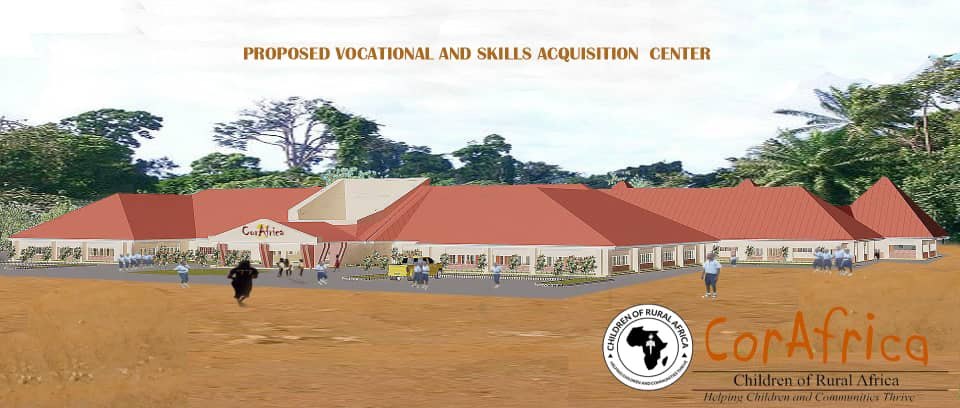
Our educational component runs from primary and secondary schooling through to tertiary support and vocational skills acquisition. A skills centre is designed to include the sections below, each one run as a working pilot rather than a lesson. The sections we built in the past were inside the schools we founded, and have been handed on with them, so CORAfrica runs none today: everything on this page describes a centre still to be built.
Functional computer laboratories with stable connectivity, reliable power with backup, trained ICT staff and proper security.
Sewing, pattern drafting and fabric selection — creativity and entrepreneurship, with income from garment production.
Hairdressing, make-up artistry and skincare, with the customer-service grounding that makes self-employment viable.
Cooking, nutrition, budgeting, childcare and household management — supporting healthy living and catering businesses.
Performance, production and teaching. Discipline, confidence and teamwork, with a route into content creation.
Precise drawing for engineering and architecture — critical thinking, and the foundation for every technical trade.
Creativity, innovation and communication, with income from art sales and design services across the creative industries.
Masonry, blocklaying and concreting, carpentry and joinery, furniture and upholstery, plumbing, tiling, painting and interior finishing, aluminium work, and solar PV installation and maintenance.
Mechanised agriculture and operations, and livestock farming — beekeeping, poultry and animal husbandry.
Why they are needed
Take the Catholic Diocese of Ogoja, where the schools we founded are: about 914,000 people, in farming country — yams, cassava, corn, rice, palm oil and kernels — with a young population and very little work for it. By our own feasibility work, around one in ten young people there reaches higher education, and most of those who do must leave to find it. Those who finish school and can neither train nor trade go to the cities as house helps, nannies and street children. A skills centre is somewhere to learn a trade without leaving home.
Graduates of technical colleges and secondary schools who want a specific skill on top of their training, to make them employable.
Young people who are not in work and have nowhere to train. Students would learn a skill of their choice and be attached to a local artisan for the practical.
Young people displaced from their homes by the conflict in Cameroon, who crossed into Cross River State and have no way to earn.
Internally displaced young people from Benue State, made homeless by herdsmen on their land and robbed of their schooling.
Six departments
A centre is planned in six departments. Between them they carry close to fifty trades — and this is the list we costed, not a wish list written afterwards.
Handicrafts, photography, music and hairdressing.
Website design, desktop publishing, graphics, computer networking and network installation, digital marketing, computer hardware and GSM repair, social media communication, and digital media production.
Electrical installation, electronics, auto mechanics, auto-body work, welding and fabrication, blacksmithing, motorcycle and tricycle repair, vulcanising and tyre repair, refrigeration and air conditioning, and automobile CNG conversion.
Tailoring and design, beadmaking, shoemaking, interior design and decoration, and cosmetology.
Masonry, bricklaying, blocklaying and concreting, woodwork, carpentry and joinery, furniture and upholstery, plumbing and pipefitting, tiling, floor cladding and interlocking, painting, decoration and interior finishing, draughting, aluminium work, and solar PV installation and maintenance.
Mechanised agriculture — mechanics and operations — and livestock farming: beekeeping, poultry and animal husbandry.
What one costs
The estimate in our 2025 appeal: what it costs to build one Vocational and Skills Acquisition Centre, with its first year of running costs as well as the building itself. Nothing here has been spent. Institutions that would like to fund a centre should talk to us.
What it takes to work
Staff are to be recruited from known institutions, with experts drawn from local artisans known to us over many years — administrative staff, professional teachers and skilled labourers.
Every department is to be furnished and equipped to match its training, so that a vocational track is genuinely practised and not merely described.
Partnerships with donors and bilateral organisations are intended to carry students through to certification and job placement.
Support the work
CORAfrica is a registered 501(c)(3) in the United States, so gifts from US donors are tax-deductible. Give monthly, and we can plan.