Our vision
A future where every child, especially the girl child in Africa, grows up healthy, educated and empowered to build a better life within their own community.

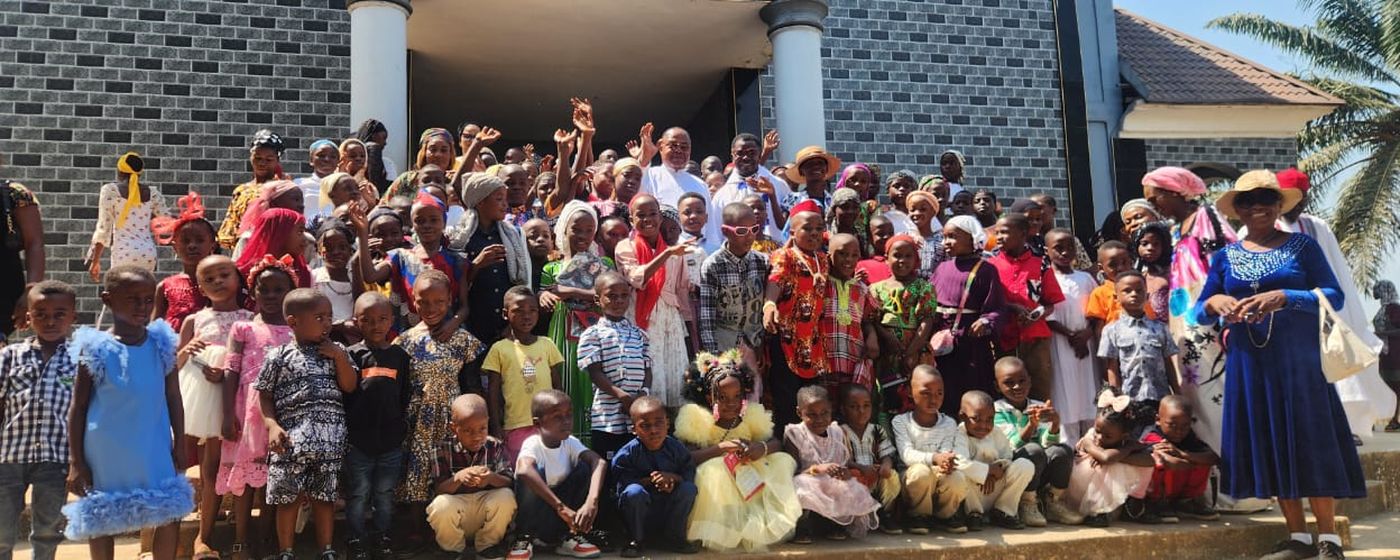
CORAfrica is a development agency, registered as a 501(c)(3) in the United States and as an NGO in Nigeria. We believe a child’s education cannot be separated from their health, their food and their family’s income — so we build them together, and then hand the work on.
Our vision
A future where every child, especially the girl child in Africa, grows up healthy, educated and empowered to build a better life within their own community.
Our mission
To transform education and healthcare for indigent children by building Community Education Centres that combine schools, clinics, farms and skills centres to ensure that children stay within their communities.
Our logo
The seal carries the map of Africa, with an open book and a torch at its heart. The torch stands for the Light our programmes are meant to bring — the conviction that education is what changes a continent’s prospects, one community at a time. Around it runs our name and our motto: Education for Africa’s Future.
Our history
Fr. Peter Obele Abue, completing a doctorate in International Development at Cornell University, founds CORAfrica to close the gap he had watched open between the developed and the developing world. It is granted 501(c)(3) status that year, with a founding Board of Trustees of Bruno Schickel, Royal Colle, Thomas Lickona and Carolann Darling.
Fr. Peter returns home, and projects follow across the Diocese of Ogoja: the Sr. Augustina Abuo Memorial Medical Clinic at Idum-Mbube in 2007, beside St. Joseph’s school and orphanage, and Little Flower School at Ipong-Obudu.
CORAfrica is incorporated under the Companies and Allied Matters Act on 6 September 2010 as a Registered Trustee of an NGO, certificate CAC/IT/NO 40479 — giving the work a legal footing in both countries it operates in.
Ray Ferguson, Fr. Jim Murphy, Anne Goetler, Tom Rooney and Jeannine Goelz join. With Abode for Children Inc. of Evans City, led by Tom and Mary Rutkoski, they upgrade St. Joseph’s Schools and Orphanage and CORAfrica Farms.
Nursery, primary and secondary schools open at Victoria, Ikom, where the community had none at all. The same year, Fr. Peter is honoured at Cross River@50, the state’s golden jubilee.
A school for refugee children from Cameroon opens at Adagom; 1,000 refugees, migrants and displaced people are trained in agribusiness with UNHCR and the International Institute of Tropical Agriculture; and six classrooms are built in an IDP camp in Benue State.
The first two Community Education Centres, at Idum-Mbube and Victoria-Ikom, are being handed to the institutions that will run them from 2027. From our headquarters in Abuja, CORAfrica runs HELP-A-KID, its empowerment programmes, the school clinics, the demonstration farms and CORA Farms — and is about to build its next centre.

Our founder
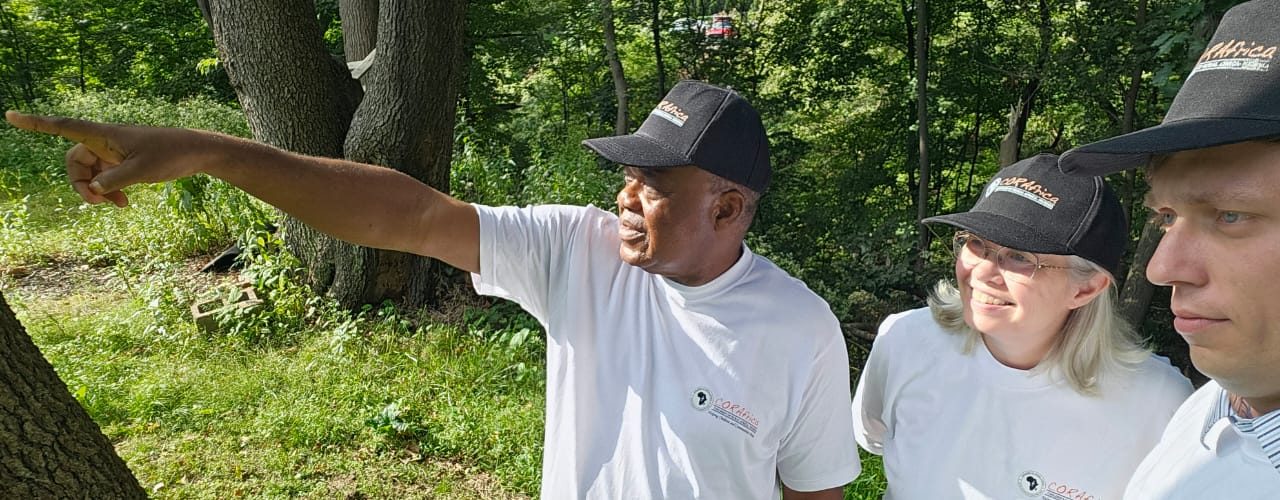
CORAfrica grew out of his doctoral research at Cornell, and out of the gap he had watched open between the developed and the developing world. Today the organisation is an independent initiative carrying on his purpose: the humanitarian mission of Christ, through an education with Christian values, brought to the poorest of the poor across Africa and beginning in Nigeria.
Boards of Trustees
CORAfrica is overseen by two Boards of Trustees, one in Nigeria and one in the United States, and our operations are directed from our headquarters in Abuja.







Our philosophy · What we believe
Every child has the right to a standard of living adequate for their health and well-being.
Every child has the right to learn how to work, to free choice of employment, to just and favourable conditions of work, and to protection against unemployment.
Everyone, without discrimination, has the right to equal pay for equal work.
Everyone who works has the right to remuneration that ensures an existence worthy of human dignity for themselves and their family.
Our values
CORAfrica’s philosophy is rooted in Catholic Social Teaching, and reduces to three core values that govern how we choose projects and how we hand them on.
Each person — each child — has an inalienable dignity, and should be treated as an end and never only as a means. Every child deserves the chance to achieve their dreams, no matter where they were born.
Faced with globalisation and the growing interdependence of peoples, the universal human family remains one. We are obliged to increase our sensitivity toward children, especially those who suffer deprivation.
We look for the explicit ways a community or institution can design its structures so that children and young people become independent — rather than relying permanently on outside intervention.