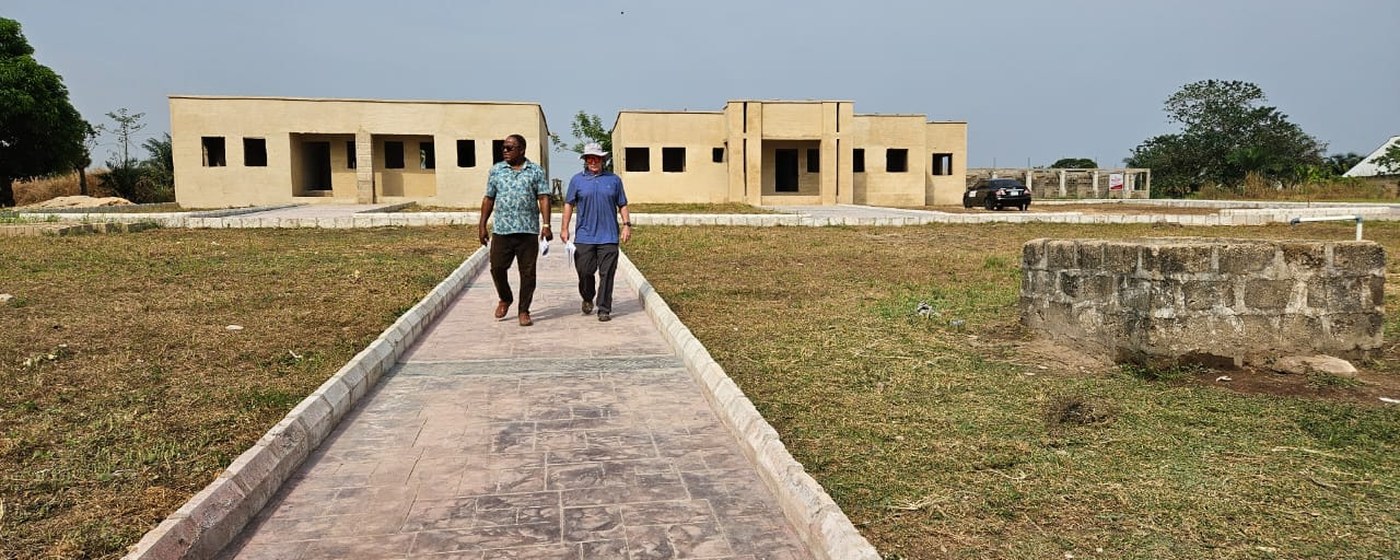
A newly built CORAfrica school block
Strategic plan 2026–2030

Twenty years in, a plan for the next twenty.

CORAfrica turns twenty in 2026. This plan sets out the first five years of the next twenty: four pillars, goals for 2027, 2029 and beyond, and targets for 2030 — with a place in each for the partners who will help us build it.

Our vision

A future where every child, especially the girl child in Africa, grows up healthy, educated and empowered to build a better life within their own community.
Our mission

To transform education and healthcare for indigent children by building Community Education Centres that combine schools, clinics, farms and skills centres to ensure that children stay within their communities.

Our twenty-year goal, 2026–2046

To scale Community Education Centres across Nigeria and Africa, creating a continent-wide child development ecosystem that delivers quality education, good health, practical skills, digital fluency and economic empowerment for rural families.

Pillar 1 · Education and e-learning

More schools, better schools, and learning that reaches further.

2026–2027

Essential goals

  • Re-establish schools for refugee, migrant and internally displaced children.
  • Upgrade existing schools into full Community Education Centres.
  • Launch the CORAfrica E-Learning Hub, with offline-first digital lessons for rural children.
  • Train teachers in crop cultivation, animal husbandry and digital literacy.
  • Expand the school demonstration farms, and build agriculture into the curriculum.
2028–2029

Midline goals

  • Establish new Community Education Centres in Nasarawa, Benue and Cross River States, and in two more states.
  • Expand HELP-A-KID scholarships, and girls’ education.
  • Open STEM and digital skills labs in every Community Education Centre.
  • Build Vocational and Skills Acquisition Centres into our new Community Education Centres.
  • Work with rural communities across Nigeria on access to education, and on keeping girls in school.
2030 and beyond

Long-term goals

  • Establish a CORAfrica tertiary institution serving all six of Nigeria’s geopolitical zones.
  • Build CORAfrica agricultural schools for young people.
  • Take the Community Education Centre to other African countries affected by poverty and displacement.
  • Advocate for government adoption of the Community Education Centre model.
Between classes at the John Stilley Schools, Victoria-Ikom.

Pillar 1, under education · Agriculture, livelihoods and economic empowerment

The income that keeps a child in class.

These are part of the education programme, not a programme beside it. In a Community Education Centre, the farm, the school fees and the loan to a parent are what keep a child in school.

2026–2027

Essential goals

  • Expand the CORA Farms demonstration sites at Ogoja, Ikom and Nasarawa.
  • Train farmers in climate-smart and mechanised agriculture.
  • Grow HELP-A-KID, and micro-credit for parents.
  • Form farming cooperatives for cassava, rice and other crops.
2028–2029

Midline goals

  • Provide micro-credit to rural farmers, entrepreneurs and small businesses.
  • Launch a Women’s Rural Livelihoods Programme in ten communities.
  • Take our agricultural programmes to new states.
  • Build value-chain processing units for cassava, yam and poultry.
2030 and beyond

Long-term goals

  • Establish a CORAfrica microfinance bank for rural families.
  • Build multi-purpose Community Education Centre farms with full value chains.
  • Take our agricultural programmes to other African countries.

Pillar 2 · Healthcare and child well-being

From clean water to a children’s hospital.

2026–2027

Essential goals

  • Build sanitation and hygiene facilities in every Community Education Centre.
  • Expand medical outreach to rural villages, refugee settlements and camps for displaced people.
  • Support immunisation for children in the rural areas where need is greatest.
  • Begin establishing children’s health centres in the Community Education Centres.
2028–2029

Midline goals

  • Supply child-friendly medicines to rural clinics.
  • Expand community health worker programmes.
  • Strengthen our partnerships with the Ministry of Health and UNHCR.
  • Launch a maternal and newborn health initiative across the Community Education Centres.
2030 and beyond

Long-term goals

  • Build a CORAfrica children’s hospital within a Community Education Centre.
  • Take our healthcare programmes to other African countries.
  • Secure multi-year funding from global health agencies.

Pillar 3 · Community infrastructure

Everything a community needs, built in one place.

Each new Community Education Centre is built for the whole community, not only for its pupils, and brings these eight parts together:

  • A school
  • A clinic
  • A demonstration farm
  • A vocational skills centre
  • Water and sanitation
  • Micro-credit and livelihoods
  • Digital learning hubs
  • Safe spaces for women and young people
2026–2027

Essential goals

  • Complete our new Community Education Centre, in Nasarawa State.
  • Pilot the full eight-part centre in Nasarawa and Cross River States.
  • Build e-learning hubs and digital classrooms into the centres.
2028–2029

Midline goals

  • Take the Community Education Centre to five more communities.
  • Add solar power, water systems and community markets.
  • Build innovation hubs for young people.
2030 and beyond

Long-term goals

  • Scale the Community Education Centre across Nigeria, and into neighbouring African countries.
  • Partner with development finance institutions to finance the infrastructure.

Pillar 4 · Governance, funding and global partnerships

The team, the systems and the partners to deliver it.

2026–2027

Essential goals

  • Strengthen key staff: a National Programmes Coordinator, a Financial Manager, and monitoring and evaluation officers.
  • Develop donor-grade policies on safeguarding, anti-fraud, gender and financial controls.
  • Adopt accounting software and telecommunication tools.
  • Recruit professional grant writers and enumerators.
2028–2029

Midline goals

  • Build administrative offices in Abuja and Lagos.
  • Establish partnership networks in the United Kingdom, the United States and the European Union.
  • Strengthen our fundraising capacity with global partners.
  • Build monitoring and evaluation dashboards and digital reporting systems.
2030 and beyond

Long-term goals

  • Build a global fundraising network.
  • Secure multi-year grants from UK, EU, US and UN donors and development finance institutions.
  • Open CORAfrica offices in all six geopolitical zones, and in selected African countries.

Our targets for 2030

Over and above where we stand in 2026

10
New Community Education Centres
Education
3,000
More children in school
Education
1,000
Girls supported by HELP-A-KID
Education
2
New children’s health centres
Healthcare
50,000
Medical consultations
Healthcare
10
Communities with better water and sanitation
Healthcare
5,000
Farmers trained
Livelihoods
2,000
Women supported with micro-credit
Livelihoods
3
Value-chain processing hubs
Livelihoods

And by 2030: digital learning built into every centre; solar power, water, sanitation and digital hubs installed; donor-grade compliance in full; and a global partnership network in place.

Alignment

Where our work meets the global agenda.

The plan, like our programmes, is aligned to six United Nations Sustainable Development Goals.

SDG 1

No poverty

Reducing poverty through education, and through micro-credit that lets a family build an income.

SDG 3

Good health and well-being

Clinics inside the school system, medical outreach to rural villages, and a focus on a child’s first 1,000 days.

SDG 4

Quality education

Primary and secondary schools where none exist, with vocational and skills training built in.

SDG 8

Decent work and economic growth

Vocational training and support for small businesses that lead to dignified, sustainable livelihoods.

SDG 10

Reduced inequalities

Reaching refugee, displaced and host communities together, without distinction.

SDG 5

Gender equality

Keeping girls in school through HELP-A-KID, and micro-credit that puts an income in women’s hands.

Why CORAfrica

Why us, and why now.

A plan this size asks a funder to trust the organisation behind it. This is the record it rests on.

Since 2006

Twenty years on the ground

Founded in 2006. Since then 7,330 children have graduated from the schools we founded, 2,550 are enrolled in them today, and our programmes have reached 64 communities.

The model

A model proven, then handed on

The Community Education Centre has been built twice, at Idum-Mbube and at Victoria-Ikom. Both work, and both pass in 2027 to the institutions that will run them, so what a partner builds with us outlasts us.

2025 accounts

Spending that reaches the work

92.6% of everything CORAfrica spent in 2025 went to programmes, and our accounts are audited every year by Akomaye Adie & Co., Chartered Accountants, of Calabar. See where every naira went.

Accountability

Registered in both countries

A 501(c)(3) in the United States since 2006 and an NGO in Nigeria since 2010, governed by a Board of Trustees in each, and reported on independently by Vanguard and ThisDay.

Partner with us

Build the plan with us.

The plan depends on partners as much as on donors. If your institution would like to fund or deliver part of it, talk to us, and we will shape the partnership around the pillar you care about.

Public sector

Governments and development agencies

Co-fund Community Education Centres, and help carry the model into public policy.

Multilateral

International and UN agencies

Health, refugee and displacement work, where we have worked alongside UNHCR and Nigeria’s National Commission for Refugees, Migrants and IDPs.

Grant makers

Foundations and charities

Multi-year support for a pillar, a centre or a single programme.

Communities

Faith and diaspora networks

Dioceses, parishes and African diaspora associations. The Catholic Diocese of Ogoja and parishes in Western Pennsylvania have long worked with us.

Corporate

Companies

Sponsor a clinic, a digital classroom, a demonstration farm or a skills centre, as part of your social responsibility.

Academic

Universities and health institutions

Research, training and teaching, and the tertiary institution the plan looks toward.